

Introduction
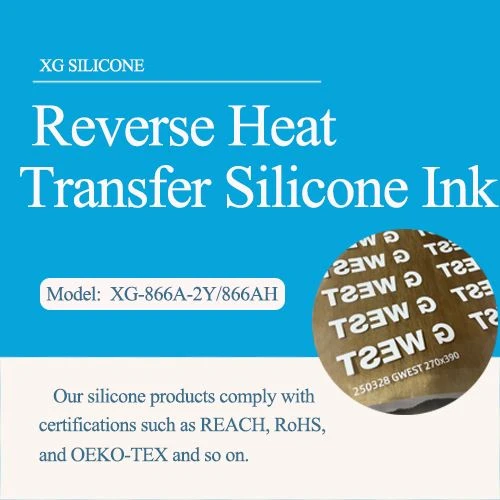
The Screen Printing Process for Reverse Heat Transfer Silicone Ink is a specialized silicone printing technique widely used in apparel decoration, especially for applications requiring high durability, clean surface appearance, and strong bonding performance.
Unlike positive heat transfer, reverse heat transfer silicone ink is printed in reverse order on PET film and then transferred onto fabric through heat and pressure. This process allows precise control of thickness, color saturation, and elasticity, making it ideal for high-density logos, detailed graphics, and functional garment printing.
Technical Overview of it
Reverse heat transfer silicone printing relies on a multi-layer screen printing structure. Each layer plays a specific role in appearance, elasticity, and adhesion. Proper ink formulation, printing sequence, and curing conditions are critical to achieving stable production results.
This is commonly applied in:
- Apparel silicone printing
- Textile silicone ink transfers
- High-density silicone heat transfer logos
- Sportswear and fashion garments
Reference Data
Step 1: Color Layer Printing
Mix XG-866A-2Y with 2–4% XG-866B-2 additive and 10% color paste for pigmentation.
The number of printing passes depends on the required pattern thickness and color coverage.
This layer determines the final visual effect after transfer and should be printed evenly to ensure color consistency.
Step 2: Intermediate Silicone Layer
Mix XG-360Z-3X with 5% XG-866B-2 additive and print 2–3 times.
This layer enhances elasticity and structural stability, helping the silicone layer maintain flexibility after repeated washing and stretching.
Step 3: Hot Melt Adhesive Layer
Print XG-360R-2 for 4–6 layers.
Each layer must be printed only after the previous layer becomes surface-dry but not fully cured.
Full curing should be carried out only after all layers are completed.
This step is essential for achieving strong adhesion between the silicone transfer and the fabric during heat transfer.
Step 4: Oven Curing
Place the printed PET film into a sealed oven at 100–120°C for approximately 40 minutes.
Controlled curing ensures uniform cross-linking of the silicone layers while preventing surface defects or excessive hardness.
Step 5: Heat Transfer Process
During garment application, transfer the printed silicone at 150°C for 15 seconds using a heat press.
This step activates the adhesive layer and securely bonds the silicone pattern to the textile surface.
Advantages
- Excellent elasticity and stretch recovery
- Clean and smooth surface after transfer
- Strong adhesion to various textile substrates
- High wash resistance and long service life
- Suitable for high-density and detailed designs
- These advantages make reverse heat transfer silicone ink a preferred solution for premium apparel branding and functional garment decoration.
Application Scope
The screen printing process for reverse heat transfer silicone ink is suitable for:
- Sportswear and activewear
- Fashion garments
- Logos and decorative patterns
- Functional textile markings
- It supports stable mass production while maintaining consistent quality across different fabric types.
Conclusion
The Screen Printing Process for Reverse Heat Transfer Silicone Ink provides a reliable and efficient solution for high-quality silicone heat transfer applications. By optimizing ink formulation, printing sequence, and curing parameters, manufacturers can achieve durable, elastic, and visually consistent silicone transfers for apparel and textile products.
machine


Hot Tags: screen printing process for reverse heat transfer silicone ink, China, suppliers, manufacturers, factory, wholesale, price, pricelist, free sample


